Yards That Shed Water Away From Foundations
Grading & Drainage Solutions in Taft for properties experiencing standing water, foundation seepage, or erosion from inadequate surface runoff control
Standing water in low spots near foundations, driveways that channel runoff toward buildings instead of away, and yards that remain saturated days after rainfall indicate grading problems that worsen over time. Water following the wrong path erodes soil, undermines concrete, and creates ideal conditions for foundation moisture intrusion and structural settling. MBP Land Clearing corrects drainage issues through regrading, swale construction, and erosion control measures across properties in Taft where water movement has been ignored during initial construction or altered by settling and landscape changes.
Drainage correction involves reshaping ground surfaces to direct water toward appropriate outlets—swales, ditches, or natural drainage corridors that carry runoff away from structures and prevent pooling in activity areas. Final grading establishes smooth transitions between different elevations while maintaining positive slope away from building perimeters, and rough grading prepares larger land areas by removing high spots and filling depressions before topsoil placement.
Schedule a property evaluation to identify current drainage flow patterns and determine where regrading or swale installation will resolve standing water issues.
How Grading Addresses Drainage Problems
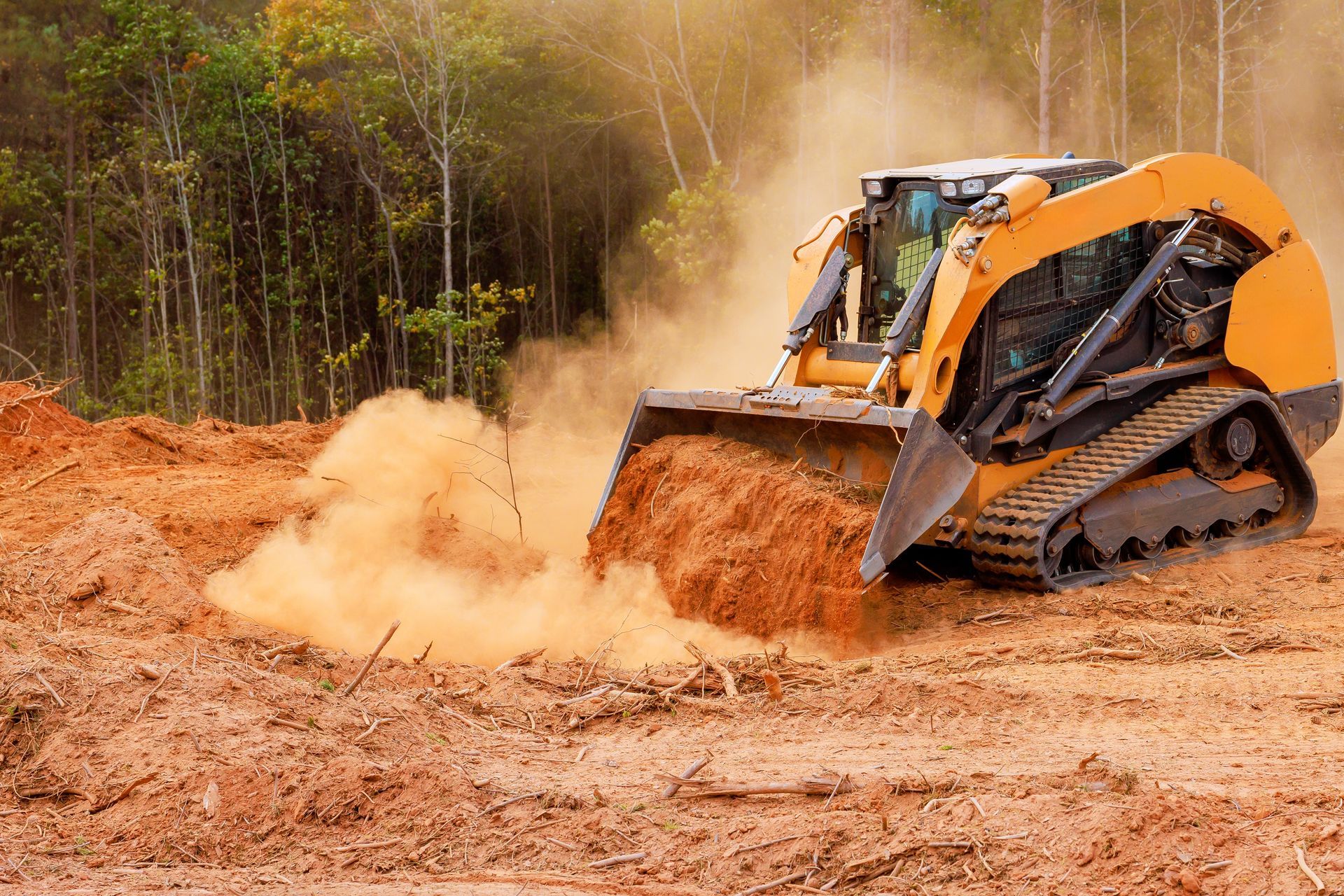
Effective grading creates consistent slope gradients that move water predictably across the property—typically a minimum two percent grade away from foundations for at least ten feet, which translates to roughly two and a half inches of elevation drop per ten feet of horizontal distance. Swales are shallow, vegetated channels with gently sloped sides that capture sheet flow from yards and driveways, conveying it to storm drains or natural drainage areas without the erosion that occurs when water concentrates into narrow, uncontrolled rivulets.
After grading work is finished, you notice water moving visibly away from buildings during rain events instead of pooling along foundation walls, and previously saturated areas dry out within hours rather than remaining muddy for days. Erosion control measures like seeding or erosion matting on steeper slopes prevent the newly graded surfaces from washing away before vegetation establishes root systems that hold soil in place.
Yard leveling differs from drainage grading in purpose—leveling focuses on creating smooth, even surfaces for lawns or activity areas, while drainage grading prioritizes slope direction and water movement even if that means introducing subtle contours that aren't immediately visible but become obvious during the next heavy rain.
What Property Owners Usually Ask
Drainage concerns prompt practical questions about how grading changes will affect existing landscaping and how quickly problems get resolved.
What's the difference between rough grading and final grading?
Rough grading shapes the overall land contours and establishes major drainage patterns across large areas, while final grading refines the surface to smooth finish elevations ready for sod, seeding, or hardscaping installation.
How do swales prevent erosion compared to just sloping the yard?
Swales provide a defined path that spreads water flow across a wider, vegetated channel rather than allowing it to concentrate into narrow streams that cut through soil—the vegetation and gentle side slopes slow water velocity, reducing its ability to detach and carry soil particles.
Will regrading affect existing trees or landscape plantings?
Grading work near established trees requires maintaining existing soil levels within the root zone to prevent root damage or suffocation—drainage solutions around mature landscaping often use shallow swales or French drains that address water movement without disturbing root systems.
How soon after grading will drainage problems improve?
Drainage improvements are immediate once grading is complete—you'll observe water moving along new flow paths during the first rain event, though vegetation establishment on disturbed soil takes several weeks and provides additional erosion protection as roots develop.
What causes drainage problems to develop years after a home is built?
Soil settling, landscape additions that block original drainage paths, gutter downspouts discharging too close to foundations, and erosion that gradually reverses slope directions all contribute to drainage failures that weren't present when construction was completed.
MBP Land Clearing provides grading and drainage solutions throughout Taft, addressing everything from minor yard leveling to comprehensive drainage system installation. Arrange an on-site assessment to review your property's water flow issues and discuss grading options that resolve them permanently.