
Water Features Built for Long-Term Stability
Pond Construction & Pond Excavation in Taft for properties needing farm ponds, recreation water features, or stormwater retention basins
MBP Land Clearing constructs new ponds, expands existing water features, and excavates retention basins across Taft and the surrounding areas. Whether you need a farm pond for livestock watering, a recreational pond for fishing, or a drainage pond to manage stormwater runoff, the excavation process involves more than digging a hole in the ground. Proper pond construction requires grading the basin to the correct depth, compacting the bottom to prevent seepage, and shaping the banks to prevent erosion during heavy rain events common in Tennessee.
Each pond excavation begins with site evaluation to determine soil composition, water table levels, and natural drainage patterns that affect how well the pond holds water year-round. Clay-rich soils compact more effectively and reduce seepage, while sandy soils may require additional lining or compaction layers to maintain consistent water levels through summer dry periods.
Schedule a property evaluation to assess soil conditions and determine the optimal pond location and depth for your specific needs.
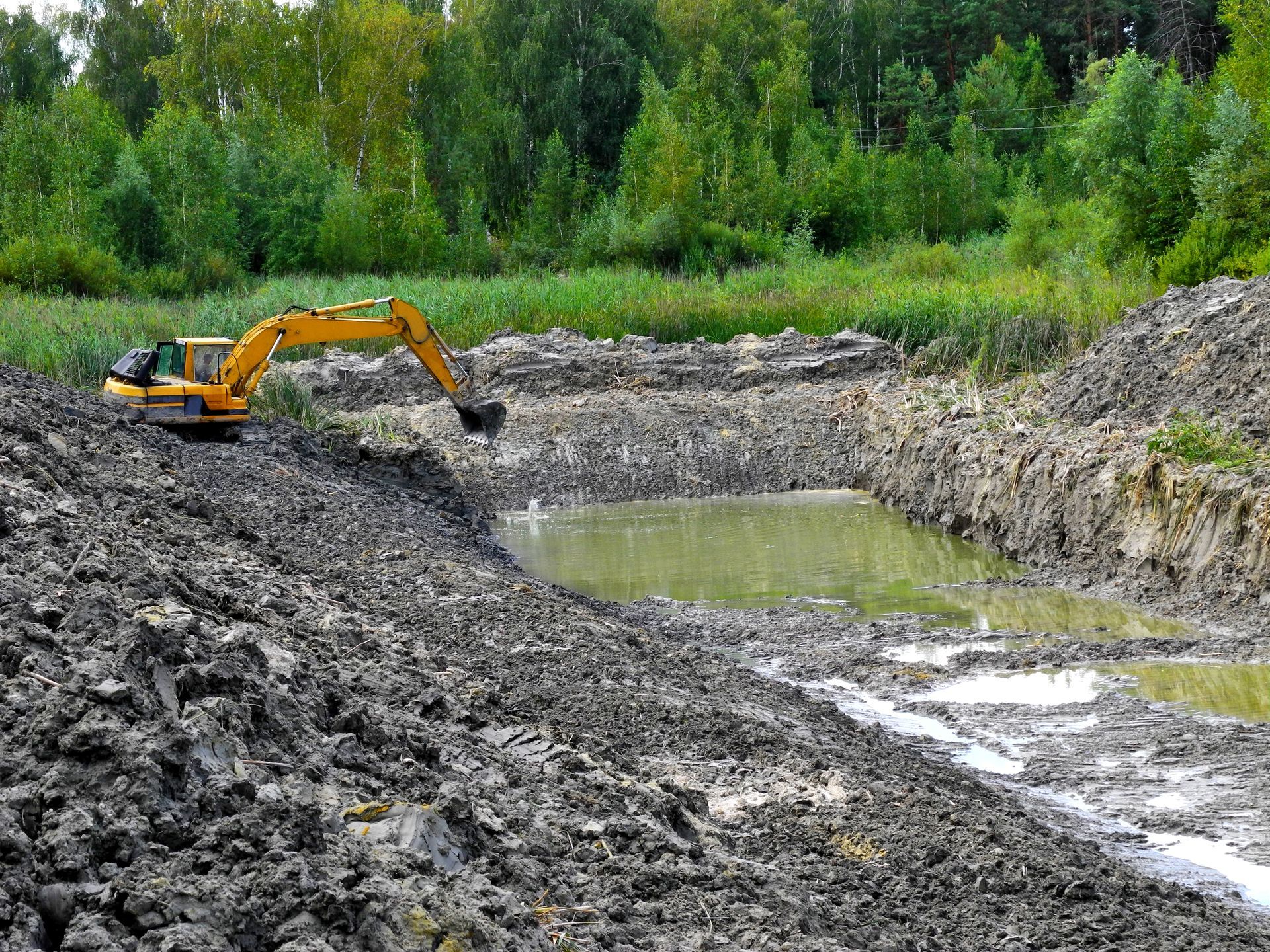
What Happens During Pond Excavation
Excavation involves removing topsoil and vegetation, shaping the basin to designed contours, and creating spillways that direct overflow away from structures during storm events. The pond bottom is graded with a gentle slope toward a deeper center zone, which prevents complete freezing in winter and maintains cooler water temperatures in summer for fish habitat.
Once excavation is complete, you see defined water edges, stable banks that resist washout, and a basin that begins filling naturally from groundwater and surface runoff. Clean-outs for existing ponds remove accumulated sediment that reduces depth over time, restoring the original water-holding capacity and improving oxygen circulation for aquatic life.
Retention ponds and drainage basins function differently than recreational ponds—they're designed with specific inlet and outlet elevations to capture runoff during heavy rainfall, hold water temporarily to reduce downstream flooding, then release it gradually through engineered spillways or culverts.
Questions Before Starting Your Pond Project
Property owners in Taft often ask about pond construction details before beginning excavation work.
What determines how deep a pond should be?
Pond depth depends on intended use—farm ponds for livestock typically require four to eight feet of depth to prevent complete evaporation during summer, while fishing ponds benefit from deeper zones of ten to twelve feet that maintain cooler water temperatures and provide winter fish habitat.
How long does it take for a new pond to fill with water?
Fill time varies with pond size, soil permeability, and seasonal rainfall—spring construction in Taft allows ponds to fill faster from higher water tables and frequent rain, while summer construction may require several months for natural groundwater seepage and runoff to reach designed water levels.
What keeps pond banks from eroding after heavy rain?
Proper bank slope angles between three-to-one and four-to-one ratios allow water to rise and fall without undercutting soil, while vegetation established on banks within the first growing season creates root structures that hold soil in place during storm events.
Can an existing pond be expanded without draining it completely?
Expansion typically involves excavating adjacent areas and connecting them to the existing water body, though water levels may need to be temporarily lowered to allow equipment access and proper grading of the new basin sections.
What's included in a pond clean-out service?
Clean-outs remove accumulated sediment, fallen vegetation, and silt from the pond bottom using excavation equipment, restoring original depth and improving water circulation—the removed material is typically spread on surrounding property or used to reshape eroded banks.
MBP Land Clearing handles pond excavation from initial site evaluation through final grading and spillway construction. Request an on-site consultation to review your property's water-holding potential and discuss pond sizing based on your intended use.